Deceased donor and living donor liver transplant with a 95%+ success rate. From evaluation to lifelong aftercare, every step with India's specialist.
A liver transplant replaces a diseased liver with a healthy one from a donor. It is the only curative treatment for end-stage liver disease and certain liver cancers.
Common indications include:
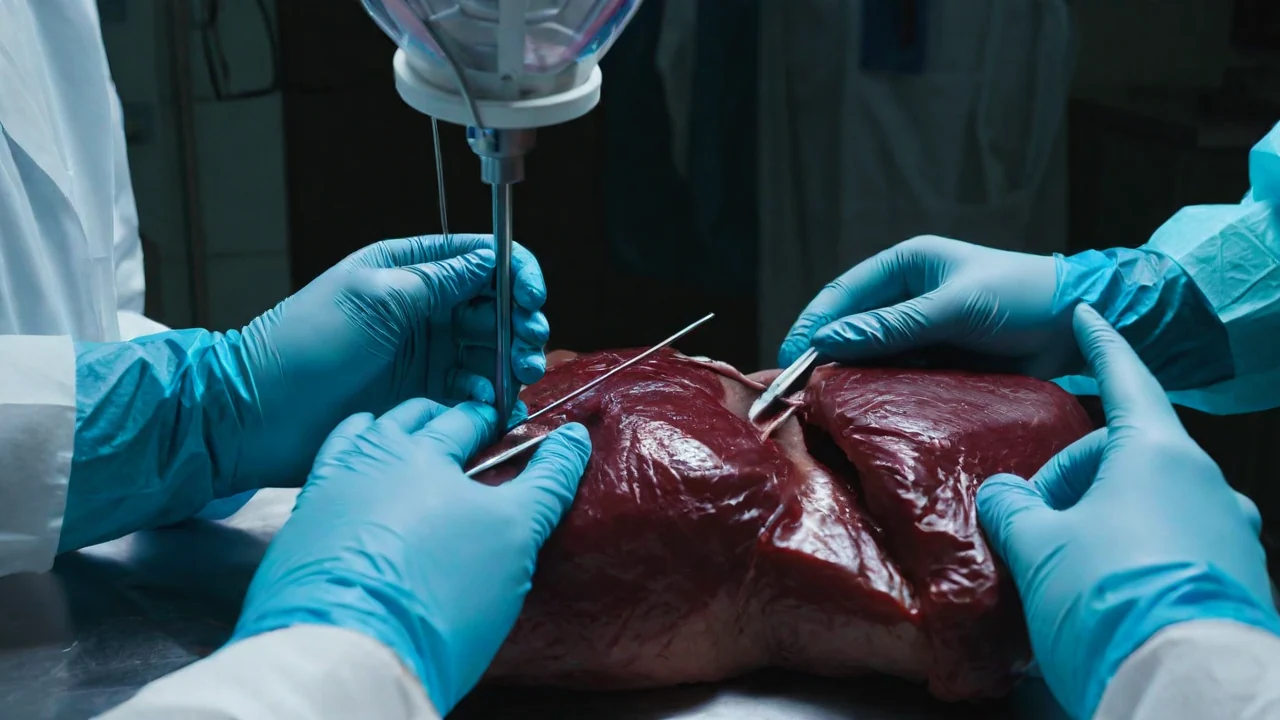
Dr. Srinivas performs all forms of liver transplantation — both adult and paediatric.
A liver from a brain-dead donor is transplanted to the recipient. Dr. Srinivas is empanelled under ZCCK (Karnataka) and TRANSTAN (Tamil Nadu) for government-allocated organs, ensuring priority access to deceased donor livers.
A healthy family member donates a portion (right or left lobe) of their liver. The liver regenerates fully in both donor and recipient within weeks. LDLT does not require waiting for a deceased donor organ.
Children with biliary atresia, metabolic liver diseases, or acute liver failure require specialised paediatric transplant techniques. Dr. Srinivas has extensive experience with reduced-size and split-liver transplants for infants and children.
When a prior transplanted liver fails due to rejection, recurrent disease, or technical complications, a second transplant may be needed. Re-transplantation is technically demanding — Dr. Srinivas has specialist experience managing these high-risk cases.
From your first consultation to long-term follow-up, here's what to expect.
Comprehensive assessment including MELD/PELD score, liver function tests, imaging (MRI/CT), cardiac evaluation, and multidisciplinary review to confirm transplant candidacy.
For DDLT: registration with ZCCK/TRANSTAN organ allocation system. For LDLT: rigorous living donor evaluation (blood type, volumetry, anatomy, health screening) to ensure donor safety.
The transplant procedure takes 8–12 hours. The native liver is removed (hepatectomy) and the donor liver implanted with precise vascular and biliary reconstructions under Dr. Srinivas's direct supervision.
Typically 3–5 days in ICU, followed by 7–10 days in ward. Daily monitoring of liver function, bile production, and anti-rejection drug levels. Family is kept closely informed.
Structured outpatient follow-up at 1 week, 1 month, 3 months, 6 months, then annually. Lifelong low-dose immunosuppression with periodic adjustment. Most patients return to normal active life within 3 months.
ZCCK and TRANSTAN registered — gets priority access to deceased donor organs under government allocation, reducing waiting time.
Outcomes matching international benchmark centres. Systematic peri-operative protocols and dedicated ICU care drive superior results.
Dr. Srinivas is both a transplant surgeon AND an HPB surgeon — he can manage complex vascular and biliary anatomy challenges that general surgeons cannot.
Dedicated coordinator for every family. Regular updates, reports on WhatsApp, and transparent communication at every step of the journey.
Patients from Sri Lanka, Bangladesh, Nepal, and the Middle East are coordinated with FRRO, medical visa letters, accommodation, and interpreter services.
Send scans, reports, and queries directly on WhatsApp. Quick triage and same-week appointments for urgent cases.
MELD (Model for End-stage Liver Disease) is a score from 6–40 that reflects liver disease severity. A MELD score above 15–18 generally indicates transplant benefit over medical management. Higher scores (25+) indicate urgent need. Dr. Srinivas evaluates each case holistically, not just by score.
For deceased donor (DDLT): waiting time varies by MELD score and organ availability — typically weeks to months. For living donor (LDLT): surgery can be scheduled within 3–6 weeks of completing donor evaluation, with no waiting list dependency.
Living donor surgery (right lobe donation) carries a mortality risk of approximately 0.1–0.5% in experienced centres. Major complication rates are 10–15%. Dr. Srinivas's team conducts thorough donor evaluation to exclude unsuitable candidates and protects donor safety as the absolute priority.
Liver transplant costs in Bengaluru range from ₹15–25 lakhs at government hospitals to ₹25–40 lakhs at private hospitals, depending on type (DDLT/LDLT), complications, and ICU duration. Many insurance plans and government schemes (PMJAY/Ayushman) cover transplant costs. Please contact us for a detailed cost estimate based on your case.
Yes. The vast majority of transplant recipients return to full normal activity within 3–6 months. Most resume work, travel, exercise, and family life. Lifelong immunosuppression (1–2 tablets/day) is required to prevent rejection, but it is generally well tolerated. Dr. Srinivas's long-term follow-up programme monitors for late complications.